 Call Now 9240212342
 Book Appointment
 Hotline 24x7

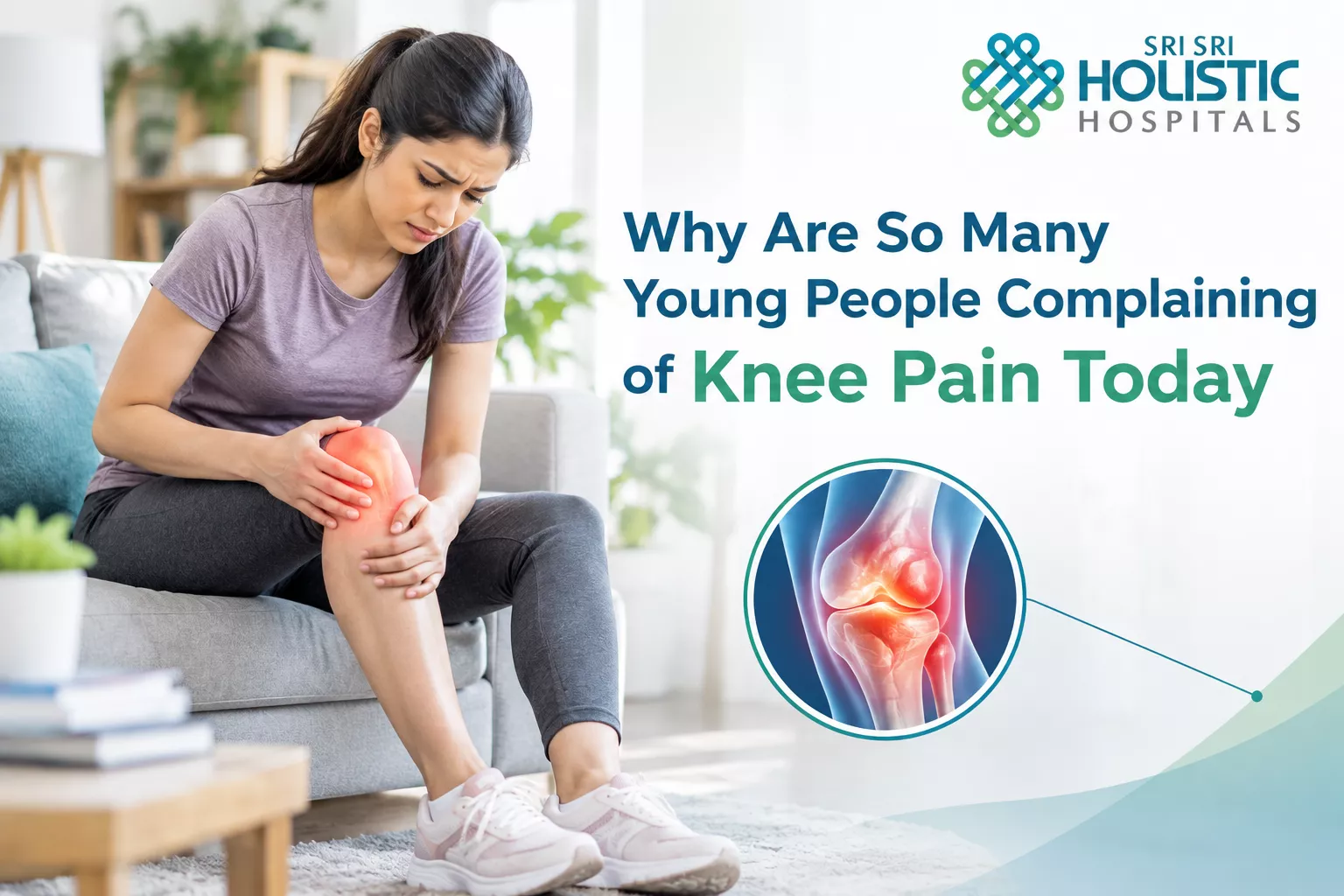
Have you noticed more people in their twenties talking about aching knees, long before you’d expect joint problems to start? Knee pain is no longer something that shows up only with age. Studies show that more than 20% of adolescents experience knee pain within a given week, and prevalence among young adults runs as high as 31.8 percent, with pain being the main complaint in nearly two out of three cases. In India, where long working hours, desk jobs, and reduced physical activity have become the norm for young professionals, this trend is becoming increasingly common. Dr. Jayini P Rammohen, MS Ortho (SRMC Chennai), Senior Orthopaedic Consultant, Sports & Joint Replacement Surgeon, Sri Sri Holistic Hospitals, throws light on why knee pain is affecting the young and what can be done about it.
Why Knee Pain is Rising Among the Young
Unlike older adults, whose knee pain is usually linked to natural wear and tear, younger people tend to develop knee problems for very different reasons. Long hours of sitting, whether at a desk or in front of a screen, weaken the muscles around the hip and thigh, placing extra load on the knee joint. Sudden increases in workout intensity, poor squatting technique, and running on hard surfaces can also strain the joint. Add to this weak thigh muscles paired with tight hamstrings, and the kneecap can shift out of its natural alignment, leading to pain during simple daily movements like climbing stairs or standing up after sitting for long.
Common Conditions Behind the Pain
- Patellofemoral Pain Syndrome (Runner’s Knee): Discomfort around or behind the kneecap due to poor alignment or muscle imbalance
- Osgood-Schlatter Disease: Pain and swelling just below the kneecap, common in active, growing teenagers during growth spurts
- Patellar Tendinitis (Jumper’s Knee): Common among athletes involved in running, cycling, or jumping sports
- Ligament Injuries or Meniscus Tears: This is caused by sudden twists during sports like football, basketball, or badminton, and needs timely medical attention
Signs you Should Not Ignore
- Pain around the front of the knee while sitting for long periods (the “movie theatre sign”), often an early warning sign
- Clicking or grinding sounds in the knee
- Stiffness after activity
- Swelling that keeps returning
- A feeling that the knee might give way
- Symptoms lasting more than two to three weeks
- Difficulty straightening the knee or climbing stairs
- If any of these signs appear, it is best to consult an orthopaedics specialist rather than wait it out.
How Knee Pain in Young People is Managed
The encouraging part is that most cases do not require surgery. Simple activity modification, such as avoiding deep squats and correcting workout form, often brings noticeable relief. Physiotherapy that strengthens the quadriceps, glutes, and core plays a major role in long-term recovery by restoring proper support to the knee joint. Supportive footwear, especially for those with flat feet, can reduce daily strain. Maintaining a healthy body weight also significantly lowers pressure on the joint. In select cases involving early cartilage wear or partial ligament injuries, regenerative treatments or injections may be recommended. Surgery is reserved only for structural problems like complete ligament tears or complex meniscus damage.
Simple Habits That Help Prevent Knee Pain
Taking a short break every 45 to 60 minutes when sitting for long hours, walking around 7,000 to 8,000 steps a day, warming up before exercise, and gradually building workout intensity can go a long way in protecting the knees. Strengthening the muscles around the joint remains one of the most effective ways to prevent pain from developing in the first place.
Conclusion
Knee pain at a young age should never be brushed aside as something that will simply pass. Left unaddressed, it can progress into long-term cartilage damage and early arthritis. With the right diagnosis and timely care, most young people recover fully and return to an active lifestyle. at Sri Sri Holistic Hospitals to get treated early.


Leave feedback about this
You must be logged in to post a comment.