 Call Now 9240212342
 Book Appointment
 Hotline 24x7

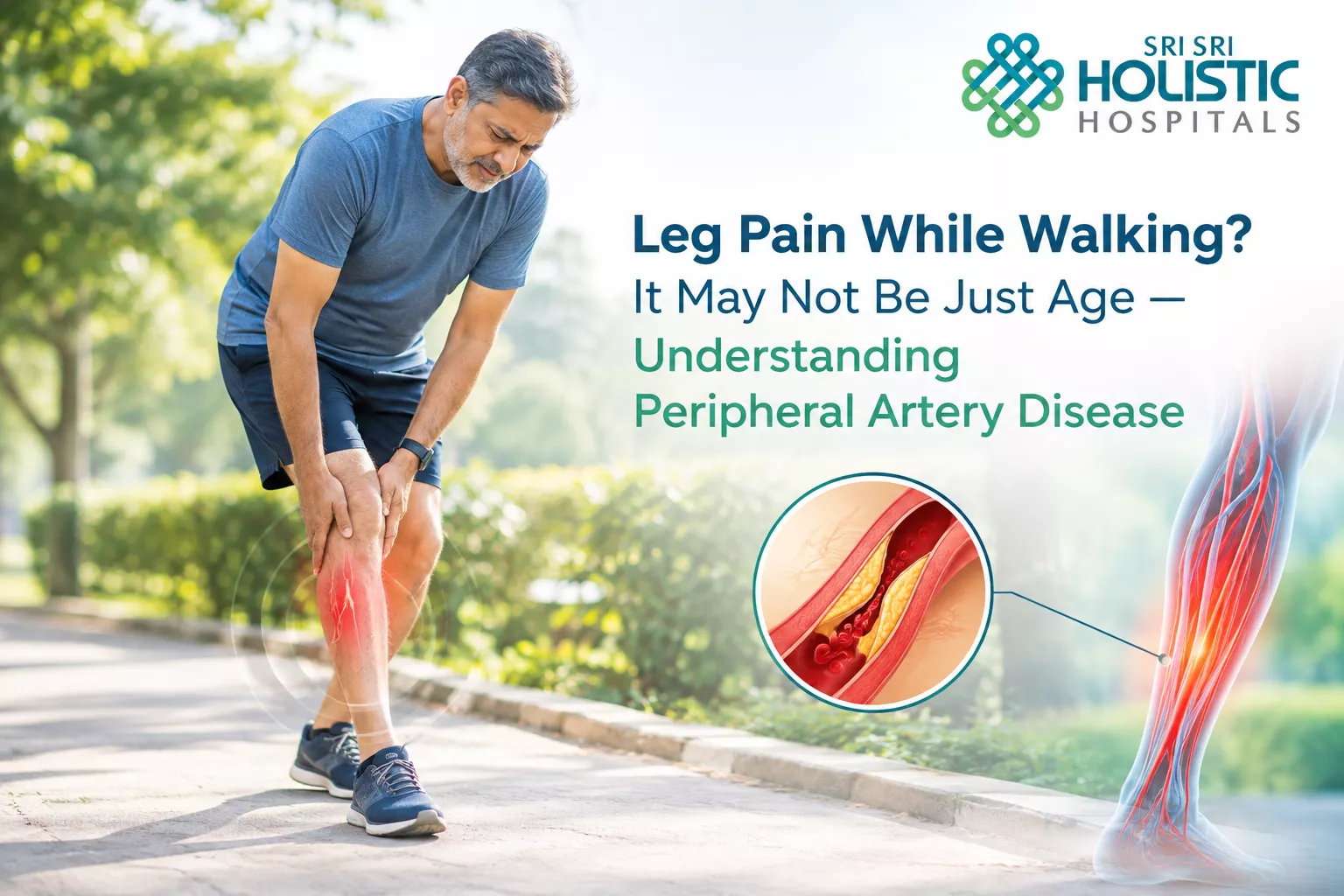
Many people develop pain in their calf or thigh while walking and simply attribute it to ageing, arthritis, muscle weakness or a lack of exercise. However, repeated leg pain that appears after walking a certain distance and improves after a few minutes of rest can sometimes be an important warning sign of Peripheral Artery Disease (PAD).
PAD occurs when the arteries carrying blood to the legs become narrowed or blocked, most commonly because of atherosclerosis—the gradual accumulation of fatty deposits and plaque within the arterial wall. As the narrowing progresses, the muscles of the leg may not receive enough blood and oxygen during activity.
A Warning Sign That is Often Ignored
One of the typical symptoms of PAD is intermittent claudication. A person may be able to walk normally for a certain distance before developing pain, cramping, heaviness or tiredness, usually in the calf. The discomfort improves after resting and returns when walking is resumed.
Because the pain disappears with rest, many people ignore it for months or even years. Some gradually reduce their walking and unknowingly adapt their lifestyle to the disease.
PAD, however, should not be dismissed as a normal part of ageing.
Who Is at Risk?
Peripheral artery disease becomes more common with increasing age, but certain factors substantially increase the risk. These include diabetes, cigarette or tobacco use, high
blood pressure, high cholesterol, kidney disease, obesity and a history of heart disease or stroke.
Diabetes and tobacco use are particularly important risk factors. People with long-standing diabetes may also have reduced sensation in their feet, allowing wounds or injuries to go unnoticed.
PAD is not only a disease of the legs. Atherosclerosis can affect arteries throughout the body, so the presence of PAD can also indicate an increased risk of heart attack and stroke.
Symptoms you Should not Ignore
Apart from pain while walking, reduced circulation to the legs can produce other warning signs. These include a foot that feels unusually cold, changes in skin colour, reduced hair growth over the legs, wounds on the toes or feet that heal slowly, and pain in the foot even while resting.
A non-healing wound or blackening of a toe should never be ignored, particularly in a person with diabetes.
At the severe end of the spectrum, blood supply can become so poor that the tissues of the foot are threatened. This condition, known as chronic limb-threatening ischemia, requires prompt specialist assessment to prevent progressive tissue loss and reduce the risk of amputation.
A different emergency occurs when an artery becomes blocked suddenly. Sudden severe leg pain associated with a cold, pale or numb foot, weakness, or loss of movement requires immediate medical attention.
How is PAD Diagnosed?
Diagnosis usually begins with a careful history and examination of the circulation in the legs.
A simple test called the Ankle-Brachial Index (ABI) compares the blood pressure at the ankle with the blood pressure in the arm. It can help identify reduced arterial circulation.
A Doppler ultrasound can then provide information about blood flow and the location of arterial narrowing or blockage. When an intervention is being considered, additional imaging such as CT angiography or other vascular imaging may be required to map the arteries in greater detail.
Does Every Blockage Need an Operation?
No.
Treatment depends on the severity of the disease, the patient’s symptoms and the condition of the limb. For many patients with mild or moderate PAD, treatment begins with controlling the factors responsible for atherosclerosis.
Stopping tobacco use is one of the most important steps. Good control of diabetes, blood pressure and cholesterol is equally important. Appropriate medications and a structured walking programme can improve symptoms and, more importantly, help reduce cardiovascular risk.
However, patients with severe lifestyle-limiting symptoms, persistent rest pain, non-healing wounds or threatened limbs may need restoration of blood flow.
Modern Treatment Can Restore Blood Flow
Advances in vascular surgery have made it possible to treat many arterial blockages through minimally invasive techniques.
During angioplasty, a thin catheter is passed through the blood vessels to the narrowed or blocked artery. A balloon is used to open the artery, and in selected situations a stent or other device may be required to maintain blood flow.
For longer or more complex arterial blockages, bypass surgery may provide a new route for blood to reach the leg and foot.
The choice between medical treatment, angioplasty and bypass surgery is individualized. The objective is not simply to treat an angiogram or a “block.” The goal is to improve the patient’s walking and quality of life, heal wounds when present, protect the limb and reduce future cardiovascular complications.
Preventing Amputation Starts Early
Many amputations do not begin with a dramatic event. They may start with a small blister, minor injury or ulcer in a person with diabetes or poor circulation.
Regular inspection of the feet is therefore particularly important for people with diabetes and PAD. Cuts, blisters, colour changes and wounds should be noticed early. Walking barefoot should be avoided, and footwear should fit properly.
Most importantly, a wound that is not healing should prompt an assessment of the blood supply to the foot rather than repeated dressing alone.
Modern vascular care combines restoration of circulation with wound care, infection control, diabetes management and appropriate foot care. Early recognition gives doctors more options and offers patients the best opportunity for limb preservation.
Listen to What your Legs are Telling You
Pain while walking is not always due to blocked arteries, and conditions involving the joints, muscles, nerves or spine can produce similar symptoms. But recurring walking-induced leg pain deserves proper evaluation especially in people with diabetes, tobacco exposure or other cardiovascular risk factors.
The message is simple: do not assume that leg pain, a non-healing foot wound or changes in the toes are merely consequences of ageing or diabetes.
Peripheral artery disease can often be identified with relatively simple tests. When detected early, lifestyle changes, medicines and modern vascular treatments can improve symptoms, protect the limb and reduce the risk of serious cardiovascular complications.
Early recognition can make the difference between living with progressive disease and preserving mobility, independence and quality of life.


Leave feedback about this