 Call Now 9240212342
 Book Appointment
 Hotline 24x7

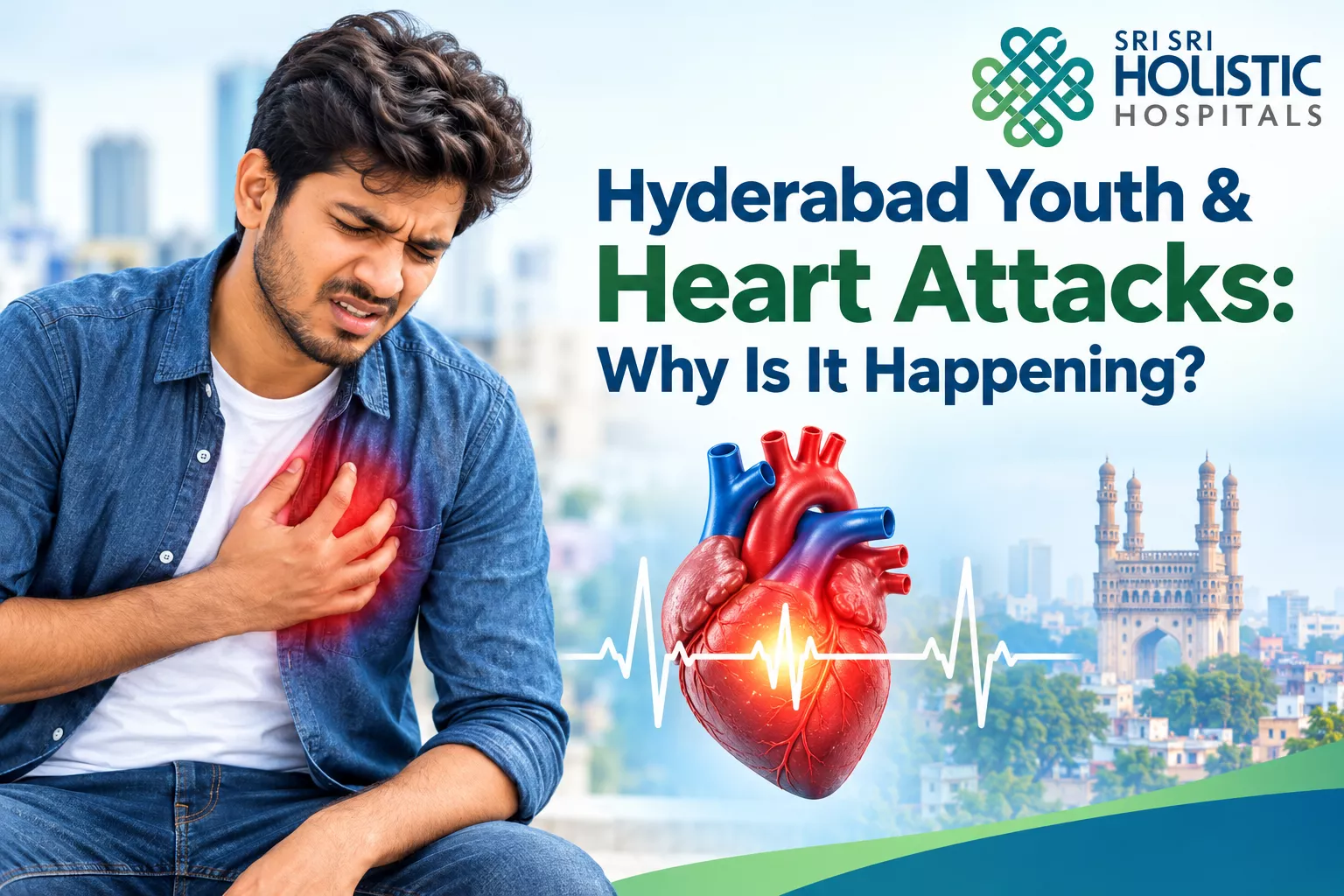
Can someone in their 20s or 30s really have a heart attack?
Many people believe heart attacks happen only to older adults. But when a young person suddenly develops chest pain, breathlessness or collapses, it can be a frightening experience for the entire family.
Today, young adults often have busy lifestyles, long working hours, high stress, less physical activity, irregular sleep and unhealthy eating habits. Along with conditions such as high blood pressure, diabetes, high cholesterol and obesity, these factors can increase the risk of heart disease.
A heart attack occurs when the blood supply to a part of the heart becomes blocked. Without timely treatment, the heart muscle can become damaged.
Dr. Biju Govind, MD, DM, FSCAI, FACC (US), FIC (Korea), Cardiologist – Interventional Cardiology, Sri Sri Holistic Hospital, KPHB, explains why heart attacks can occur in younger people, the warning signs that should not be ignored, and how young adults can take better care of their heart.
Why Are Heart Attacks Happening in Younger People?
There is usually not one single reason.
Several risk factors can increase the chances of developing heart disease at a younger age, including:
- High blood pressure
- Diabetes or high blood sugar
- High cholesterol
- Smoking or tobacco use
- Being overweight
- Lack of regular exercise
- Unhealthy food habits
- Poor sleep
- Long-term stress
- Excessive alcohol consumption
- Family history of heart disease
Having one or more of these risk factors does not mean that a person will definitely have a heart attack. However, they are important reasons to take heart health seriously.
What Are the Warning Signs of a Heart Attack?
A heart attack does not always look like the dramatic chest pain shown in movies.
Common warning signs include:
- Pressure, heaviness or tightness in the chest
- Chest pain that may spread to the arm, shoulder, back, neck or jaw
- Shortness of breath
- Sudden sweating
- Nausea or vomiting
- Dizziness or feeling faint
- Unusual weakness or extreme tiredness
Some people may have mild or unusual symptoms and may mistake them for acidity, gas or tiredness.
If chest discomfort is new, severe, persistent or associated with breathlessness, sweating, dizziness or pain spreading to another part of the body, seek emergency medical care immediately.
Why Do Young People Ignore Heart Symptoms?
One common reason is the belief:
“I’m too young to have a heart problem.”
A young person may also think:
“It’s just gas.”
“I’m stressed.”
“I’ll feel better after some rest.”
This can delay medical attention.
Not every chest pain is a heart attack, but new or unexplained chest pain should not be casually dismissed.
Can Stress Affect Your Heart?
Young professionals may spend long hours working, sitting at a desk and dealing with work pressure.
Stress can also affect sleep, eating habits, physical activity and other lifestyle behaviours.
Instead of ignoring these factors, it is important to build healthier routines:
- Make time for regular physical activity
- Get adequate sleep
- Eat a balanced diet
- Avoid tobacco
- Manage stress in healthy ways
- Keep regular health checks if you have risk factors
What About Smoking?
Smoking and tobacco use are major risk factors for heart disease.
Tobacco can damage blood vessels and contribute to the development of cardiovascular disease.
Young smokers should not assume that heart problems are something they only need to worry about later in life.
Quitting tobacco is one of the most important steps you can take for your heart.
Who Should Be More Careful?
Young adults should pay particular attention to their heart health if they have:
- A family history of heart disease
- High blood pressure
- Diabetes
- High cholesterol
- Excess weight
- A smoking or tobacco habit
- Low physical activity
- Poor sleep
- Multiple heart-disease risk factors
Regular health check-ups can help identify problems such as high BP, high blood sugar and high cholesterol early.
What Tests May Be Needed?
There is no single heart test that is necessary for every young person.
Depending on your symptoms, age, family history and risk factors, a cardiologist may recommend tests such as:
- Blood pressure measurement
- Blood sugar testing
- Cholesterol testing
- ECG
- Echocardiogram
- Stress testing
- Holter monitoring
- Other cardiac investigations when clinically required
Your cardiologist will decide which tests are appropriate based on your individual risk and symptoms.
Can Young Adults Protect Their Heart?
Yes. Small changes can make a big difference.
Stay Active
Avoid sitting continuously for long periods. Include regular physical activity in your daily routine.
Eat Better
Choose a balanced diet and limit excessive processed foods, unhealthy fats, salt and added sugars.
Don’t Smoke
If you smoke or use tobacco, quitting can significantly benefit your heart health.
Sleep Properly
Try to maintain a regular sleep schedule and avoid consistently sacrificing sleep for work or entertainment.
Know Your Health Numbers
Keep track of:
- Blood pressure
- Blood sugar
- Cholesterol
- Body weight
If any of these are abnormal, discuss them with your doctor.
Meet Dr. Biju Govind
Dr. Biju Govind is a cardiologist with 23 years of experience at Sri Sri Holistic Hospital, KPHB.
Qualifications
MD, DM, FSCAI, FACC (US), FIC (Korea)
Areas of Expertise
Dr. Biju Govind’s areas of expertise include:
- Interventional Cardiology
- Acute Cardiac Case Management
- Coronary and Structural Heart Disease Interventions
- Non-Coronary Interventions
- Pacemaker Insertions
- Balloon Valvotomy
- TransThoracic and TransEsophageal Echocardiography
- Stress Tests
- Holter Analysis
His profile also records experience of more than 15,000 angioplasties and 1,000 non-coronary interventions, along with academic and teaching experience in cardiology.
He has also undergone international fellowship training in Interventional Cardiology at Asan Medical Centre, Seoul, South Korea, and has been involved in national and international cardiology conferences and medical education.
When Should You See a Cardiologist?
Don’t wait for a major heart problem before paying attention to your cardiovascular health.
Consider consulting a cardiologist if you experience:
- Unexplained chest discomfort
- Breathlessness
- Palpitations
- Dizziness or fainting
- Reduced ability to exercise
- Unusual tiredness
- Or if you have multiple heart-disease risk factors
A cardiologist can assess your symptoms and determine whether further testing is required.
The Takeaway for Young Adults
Heart attacks are not only an older person’s problem.
Being young does not completely protect you from heart disease.
High BP, diabetes, high cholesterol, smoking, excess weight, physical inactivity, poor sleep and unhealthy lifestyle habits can increase cardiovascular risk.
Most importantly, don’t ignore unusual chest pain or other possible heart-attack symptoms simply because you are young.
Know your risk factors. Take care of your heart. And when something feels seriously wrong, seek medical attention without delay.
For expert cardiac evaluation and personalised care, consult Dr. Biju Govind, MD, DM, FSCAI, FACC (US), FIC (Korea), Cardiologist – Interventional Cardiology, Sri Sri Holistic Hospital, KPHB.


Leave feedback about this