 Call Now 9240212342
 Book Appointment
 Hotline 24x7

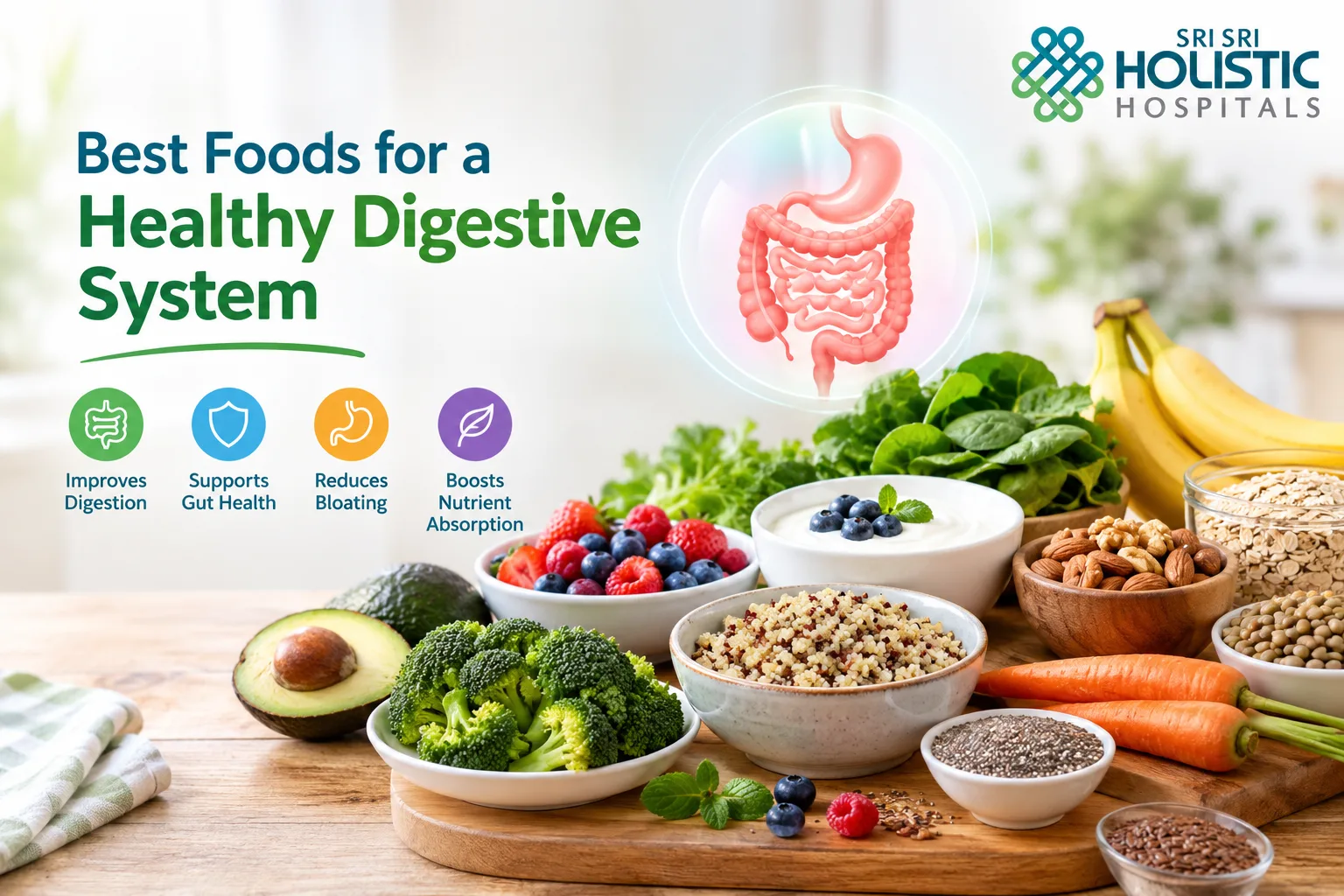
Your digestive system helps break down food, absorb nutrients, and support overall health. The foods you eat can influence digestion, bowel regularity, and digestive comfort. A balanced diet containing fiber-rich foods, adequate fluids, and a variety of nutrient-dense ingredients can support healthy digestive function.
However, persistent acidity, abdominal pain, changes in bowel habits, blood in stools, or unexplained weight loss should not be managed through diet alone. These symptoms may require evaluation by a gastroenterology specialist.
Why Is a Healthy Diet Important for Digestion?
A balanced diet provides fiber and nutrients needed for normal digestive function. Fiber can support bowel regularity, while adequate water helps maintain normal intestinal function.
Eating a variety of whole and minimally processed foods, maintaining suitable portions, and limiting excessive processed foods can support digestive comfort.
Best Foods for a Healthy Digestive System
Good choices include:
• Fruits such as bananas, apples, papaya, oranges, and berries
• Vegetables such as carrots, leafy greens, pumpkin, and beans
• Whole grains such as oats, brown rice, and whole-wheat foods
• Legumes such as lentils, chickpeas, and beans
• Curd and suitable fermented foods
• Nuts and seeds in appropriate portions
• Adequate water and healthy fluids
Individual tolerance varies, so foods that repeatedly trigger symptoms should be identified with professional guidance.
Fiber-Rich Foods for Better Digestion
Dietary fiber can help promote regular bowel movements and support normal intestinal function. Vegetables, fruits, whole grains, legumes, nuts, and seeds are useful sources.
If your current fiber intake is low, increase it gradually and drink adequate water. People with certain digestive disorders may need individualized dietary advice.
Foods That Support Gut Health
Curd and other suitable fermented foods can be included in a balanced diet, while fruits, vegetables, whole grains, nuts, and legumes provide different types of fiber and plant nutrients.
A diverse diet is generally more useful than relying on one “gut health” food. People with IBS, IBD, acid reflux, or other digestive conditions may need personalized dietary recommendations.
Foods to Limit for Better Digestive Health
Some foods may aggravate digestive symptoms in certain people. Depending on individual tolerance, consider limiting:
• Excessively oily or fried foods
• Highly processed foods
• Excessive sugary foods and drinks
• Very large meals
• Foods that consistently trigger acidity or bloating
• Excessive alcohol
Specific digestive conditions may require more targeted dietary recommendations.
Healthy Eating Habits for Better Digestion
Simple habits can support digestive comfort:
• Eat balanced meals at regular intervals.
• Chew food thoroughly and eat slowly.
• Drink adequate water throughout the day.
• Include vegetables, fruits, and whole grains regularly.
• Avoid consistently overeating.
• Maintain regular physical activity.
• Identify foods that repeatedly cause discomfort.
When Should You See a Gastroenterologist?
Seek medical evaluation for ongoing abdominal pain, persistent acidity or reflux, repeated vomiting, difficulty swallowing, blood or black stools, unexplained weight loss, persistent diarrhea or constipation, or significant changes in bowel habits.
Depending on symptoms, evaluation may include laboratory tests, endoscopy, colonoscopy, imaging, or other specialized investigations.
Digestive Health Care at Sri Sri Holistic Hospitals
Sri Sri Holistic Hospitals provides comprehensive gastroenterology care for conditions affecting the gastrointestinal tract, liver, pancreas, and biliary system. Services include endoscopy, colonoscopy, ERCP, endoscopic ultrasound, capsule endoscopy, and double-balloon enteroscopy.
Care is available for conditions including acid reflux and GERD, ulcers, IBS, IBD, chronic abdominal pain, liver disease, gallbladder and bile duct stones, pancreatitis, and other digestive disorders. Dietary guidance can be included in an individualized care plan when appropriate.
Conclusion
A healthy digestive system starts with a balanced and varied diet. Fruits, vegetables, whole grains, legumes, suitable fermented foods, nuts, seeds, and adequate fluids can support normal digestion.
There is no single food that guarantees digestive health. Your ideal diet depends on your overall health and individual tolerance. If symptoms persist or become concerning, professional evaluation is important rather than relying only on dietary changes.
FAQs
What foods are best for digestion?
Fruits, vegetables, whole grains, legumes, nuts, seeds, and suitable fermented foods can be part of a balanced diet that supports healthy digestion.
Is curd good for digestive health?
Curd can be included in a balanced diet and may provide beneficial microorganisms. Individual tolerance varies.
What foods should I avoid if I have digestive problems?
There is no universal list. Fried or highly processed foods, excessive alcohol, very large meals, and foods that consistently worsen symptoms may need to be limited.
Can diet alone treat digestive disorders?
Diet can support digestive health and symptom management in some conditions, but persistent or significant symptoms require medical evaluation and may need additional treatment.


Leave feedback about this
You must be logged in to post a comment.